Spark Plugs Explained
What if the smallest part under your bonnet turned out to be the most expensive mistake you ever made?
These components sit quietly under your bonnet, firing thousands of times every minute, keeping your engine alive. Nobody gives them a second thought. Then, one wet Thursday on the M6 near Wigan, the engine cuts out mid-lane, and suddenly, they have your full attention.
Here’s the uncomfortable truth: spark plug failure rarely arrives without warning. The signs build gradually. A rough idle at the lights. Sluggish acceleration pulling onto the motorway. Fuel economy dropping for no obvious reason. Most drivers shrug these off. By the time the engine actually stops, the damage has spread well beyond the plugs themselves, and the repair bill reflects it.
These parts are smaller than your little finger, yet your engine depends on every single one of them.
Read on to find out why Wigan and Bolton drivers should take their spark plugs seriously.
What Role Do Spark Plugs Play in Your Engine?
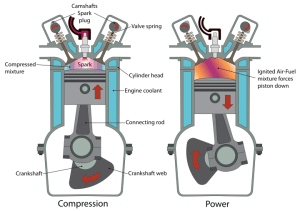
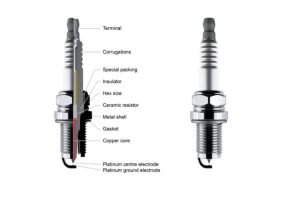
Beneath your bonnet, dozens of engine parts must cooperate with split-second precision. At the centre of all of this is the spark plug; a small device responsible for generating thousands of sparks every minute, igniting the air and fuel mixture inside each combustion chamber.
Don’t let their size fool you. Spark plugs are fundamental to every petrol engine. They sit in the cylinder head, threaded into the top of each cylinder. A four-cylinder engine has four. A six-cylinder has six. Some modern engines go a step further with dual-spark technology, using two spark plugs per cylinder.
Consider the pilot light on a gas boiler. It produces a small flame to ignite the gas supply whenever your heating fires up. Spark plugs serve a similar purpose inside your engine, but they must fire with perfect accuracy thousands of times per minute. If even one spark is poorly timed, the fuel and air mixture won’t ignite, the pistons won’t move, and power delivery stops altogether.
How Do Spark Plug Types Differ?
Installing the wrong spark plug is a fast track to engine trouble. Your vehicle was built for a specific type, and using anything else risks genuine damage. Here’s what separates one plug from another:
- Heat Range: This measures how efficiently a spark plug moves heat away from its tip. Some plugs disperse heat quickly; others retain it. Get the heat range wrong and the consequences range from lacklustre performance to severe engine and catalytic converter damage. The manufacturer’s specification exists for a reason, and it’s not one to ignore.
- Design Specifications: Thread diameter, electrode configuration, and the depth the tip extends into the combustion chamber are all precisely engineered for each engine. These measurements ensure correct combustion and effective heat management. Even small deviations from the specification can cause problems.
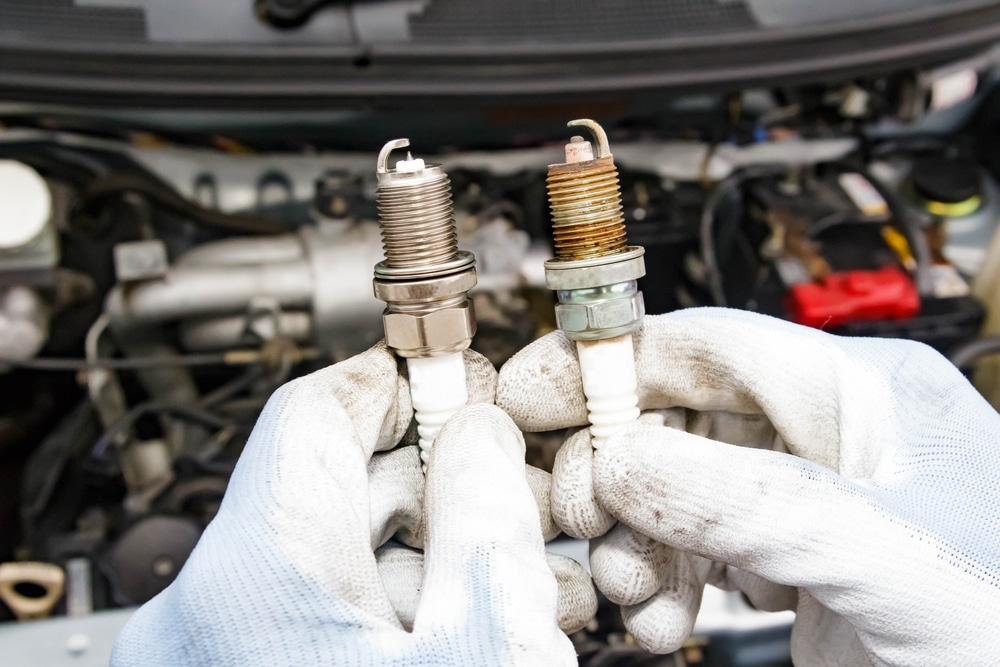
- Electrode Material: Copper, platinum, and iridium are the three main options. Copper offers strong conductivity but wears fastest. Platinum strikes a balance between durability and cost. Iridium lasts the longest of the three, which explains its premium price tag.
Manufacturers specify the exact spark plug type your engine needs after thorough testing. At Standish Service Station, we fit only manufacturer-specified, high-quality (OEM[^1]) parts.
Selecting the right plug is just the beginning. Installation quality determines whether your engine runs smoothly or develops problems that could have been prevented. A careless fitting leads to poor performance, engine faults, and avoidable expense.
Want to know which spark plug type your vehicle requires? Ring Standish Service Station on 01257 422899 for straightforward advice.
What Reduces Your Spark Plugs’ Working Life?
Several factors influence how long your spark plugs perform effectively:
- Driving Habits: Regular short journeys around Standish or into Wigan, where the engine never fully warms up, create a fuel-rich environment. Carbon gradually builds up on the electrode and insulator nose, reducing firing effectiveness over time. The result is rough idling, misfires, and climbing fuel costs. A longer drive now and then, perhaps down the M6 towards Bolton or out into the Lancashire countryside, helps maintain clean combustion and keeps your spark plugs healthier for longer.
- Heat Range: Each spark plug is designed to operate within a specific temperature band. Running too cool allows carbon to accumulate on the tip, triggering misfires. Running too hot can cause pre-ignition, where the fuel ignites before the spark fires, risking damage to pistons and valves. Manufacturers test extensively to determine the right plug for each engine, and at Standish Service Station we always follow their guidance.
- Fuel Quality & Additives: Not every fuel is the same, despite what the price at the pump might suggest. Higher-quality fuels contain more effective cleaning agents that help prevent carbon deposits on electrode tips. For higher-performance or newer vehicles, premium fuels with enhanced additives offer meaningful protection. Better fuel is a small outlay that helps avoid bigger costs further down the road.
- Engine Conditions: When oil finds its way into combustion chambers through worn valve seals or piston rings, or when air-fuel mixtures run incorrectly, your spark plugs take the hit. Cooling system faults compound the problem. Keeping all engine systems properly serviced shields your spark plugs from unnecessary wear.
How Can You Spot Failing Spark Plugs?
Worn spark plugs make themselves known through symptoms you’ll feel behind the wheel. These are the key ones to watch for:
- Check Engine Light Activation: Today’s vehicles use advanced engine management systems that continuously track combustion efficiency. When spark plugs can’t ignite the air-fuel mixture as they should, the system triggers the check engine warning light on your dashboard, flagging that something needs investigating.
- Starting Difficulties: If your car becomes increasingly reluctant to start, particularly during cold Lancashire mornings, weakening spark plugs may not be generating a strong enough spark. This tends to worsen gradually until eventually, the engine refuses to turn over at all.
- Performance Deterioration: Hesitant acceleration, brief power drops, or an uneven idle all suggest spark plugs that aren’t firing correctly. Fuel bills tend to creep up as the engine compensates for incomplete combustion. Ignore the problem for too long and repeated misfires can damage the catalytic converter, turning what should have been a straightforward service into a significantly more expensive repair.
The complication is that these symptoms can point to other engine faults entirely. If you notice any of them, don’t sit on it. Ring Standish Service Station on 01257 422899 and let our team identify the cause before things escalate.
What Does Correct Spark Plug Replacement Look Like?
Getting spark plugs replaced properly demands specialist tools, technical expertise, and careful precision throughout.
The process begins with removing the engine cover. Each old plug is then extracted using a spark plug socket tool.
Before fitting new plugs, we confirm they match the manufacturer’s specifications. The electrode gap is measured with a feeler gauge, because even a tiny discrepancy affects how the plug fires. We clean the surrounding area meticulously to prevent debris from dropping into the cylinder, a precaution that avoids potential internal engine damage. Every new plug is hand-threaded first to rule out cross-threading, then tightened to the manufacturer’s specified torque setting. Once reassembled, we run the engine to verify everything is performing correctly.
If the job isn’t handled with care, complications follow:
- Incorrect torque causes compression leaks or stripped threads
- Fitting the wrong plug type risks engine damage or harm to the catalytic converter
- Seized plugs can snap during removal, requiring specialist extraction
- Debris entering the cylinder during the process leads to internal engine damage
- Cross-threading during installation results in costly cylinder head repairs
Our technicians at Standish Service Station bring extensive, model-specific experience to every spark plug replacement.
We use manufacturer-approved parts and keep our torque wrenches calibrated for precise fitting. A courtesy car is available while we carry out the work. Your vehicle leaves our Standish garage running at peak performance.
Why Is Postponing Spark Plug Replacement Risky?
Delaying spark plug replacement feels like a sensible economy, until the consequences catch up with you. The small amount you save by waiting gets dwarfed by the bill that follows, and it tends to land at the worst possible time; a cold start on a Monday morning or the M61 in rush hour with the family on board.
When Should You Replace Your Spark Plugs?
The answer depends on which type is fitted to your engine:
- Platinum-tipped plugs offer a good balance, lasting longer than copper at a moderate cost
- Iridium-tipped plugs deliver the longest service life, making their higher price worthwhile
- Copper-core plugs cost the least to buy, but their electrodes deteriorate faster, so you’ll be back at the garage sooner
The crucial point is that your vehicle’s manufacturer determines which plug goes in. Going against their specification risks poor performance and potential engine damage.
At Standish Service Station, we stick to manufacturer replacement schedules without compromise. This is not optional maintenance; it’s your best defence against unexpected breakdowns and repair bills. The risk is not worth taking.
What’s True and What’s Myth About Spark Plugs?
Over the years serving drivers in Standish, Wigan and Bolton, our team at Standish Service Station has encountered no shortage of spark plug myths. Here are the ones we hear repeatedly:
“Spark plugs only matter when you start the engine.”
A widespread misconception. Spark plugs fire continuously throughout every journey, delivering precisely timed sparks hundreds of times per minute. They’re working just as hard at motorway cruising speed as they are the moment you turn the key.
“Modern spark plugs last forever.”
They last considerably longer than older generations, but no spark plug is permanent. Constant electrical discharge, extreme temperature cycles, and combustion byproducts all wear the electrode down over time. Even the best iridium plugs reach a point where they can no longer fire reliably. The manufacturer’s replacement schedule exists to catch this before it becomes a problem.
“All spark plugs are the same.”
Far from it. Copper, platinum and iridium plugs each have different heat ranges and electrode designs, all tailored to specific engines. Fitting the wrong type can reduce performance, increase fuel consumption, and cause engine damage. Manufacturers select a precise plug to match your engine’s compression ratio, combustion chamber geometry, and operating temperature. Nothing about that selection is arbitrary.
“If one fails, just replace that one.”
It sounds reasonable, but it leads to repeated visits and higher costs over time. Spark plugs wear at broadly the same rate, so when one gives out, the rest are close behind. Manufacturers recommend replacing the full set together, and that advice saves both time and money.
Why Choose Standish Service Station for Your Spark Plugs?
With spark plugs, the cost of prevention is always lower than the cost of failure. Most drivers only appreciate how vital these components are after something has gone wrong. There’s a smarter approach.
At Standish Service Station, we build our service around getting ahead of problems before they escalate. You’ll benefit from:
- Guaranteed use of manufacturer-specified or premium OEM replacement parts
- A comprehensive 12-month parts and labour guarantee
- Specialist equipment and experienced technicians for accurate spark plug diagnosis and replacement
- A courtesy car so you’re not left without wheels
- Transparent pricing with no hidden costs
- A {{average-rating}} star Google rating from {{review-count}} satisfied customers
Our team is focused on keeping your vehicle dependable, keeping you safe on Lancashire’s roads, and making sure every service visit is worth your time and money.
Ring Standish Service Station today on 01257 422899. Our Standish team will give you clear, no-nonsense advice that keeps your engine running smoothly for the long haul.