How Does Car Suspension Work?
You drive over a speed bump on your way through town, and a low thud comes from underneath your car.
So, you ease off the speed and listen… But you hear nothing.
You drive over a pothole a few streets later, and the same clunking sound comes back…
That noise sticks with you. You can’t stop listening out for it after that, and every bump in the road brings it back.
It’s the kind of sound that’s easy to brush off at first, but it can be a sign of suspension issues developing.
Because this kind of deterioration builds gradually over weeks and months, it’s easy to adapt to how the car feels without recognising how much has changed.
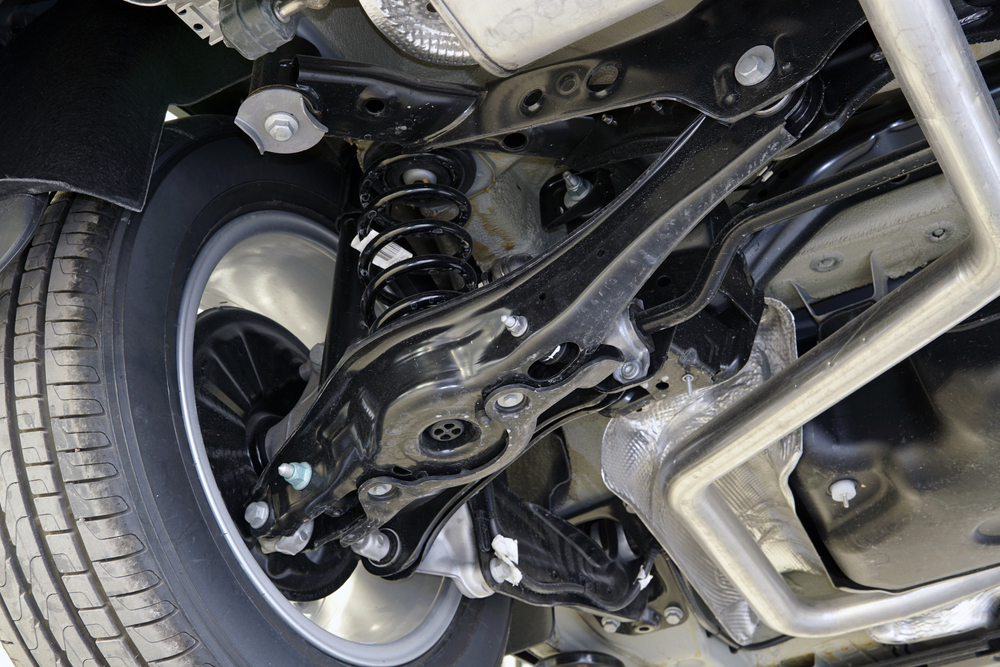
Your car’s suspension connects the wheels to the body and helps control how the vehicle responds to uneven road surfaces, keeping the cabin stable and the tyres in contact with the road. It’s made up of several components, including springs, shock absorbers, control arms, and bushings, each of which wears gradually, which means issues can develop without a sudden warning.
Your car’s suspension uses a combination of springs, shock absorbers, control arms and other components to keep the vehicle stable and the tyres in contact with the road
If you’ve ever wondered “How does car suspension work?”, this is the right place to start.
This guide covers what each suspension part does, how wear creeps in, and the signs worth acting on. Whether you’ve had an MOT advisory, noticed something that doesn’t feel right, or want to understand your car better before calling a garage, everything you need is here.
What Does Car Suspension Do?
So, how does car suspension work? It starts with what the system is there to do.
Roads aren’t always smooth; potholes, expansion joints, patched tarmac, and uneven surfaces are a constant. Without suspension, every single one of those surface imperfections would travel straight through the wheels, through the chassis, and into you.
Your suspension system fills the gap between the wheels and the body of the car. It controls how the vehicle reacts to changing road surfaces, holds the tyres to the tarmac, and keeps the cabin settled enough for you to steer, brake, and accelerate with confidence.
So what does car suspension do?
Your suspension does three things, all at once:
- Road Impact Control: When a wheel meets a bump, the suspension compresses to absorb and reduce the force before it reaches the cabin.
- Tyre Contact: It holds the tyres firmly against the road surface, even over uneven ground, so braking and steering remain effective.
- Stability: It governs how far the car rolls in corners, how much the nose dips under braking, and how much the rear squats when you accelerate.
When all three are working as they should, your suspension disappears into the background. You don’t notice it; it just works, and most drivers don’t give it a thought until something shifts.
As parts start to wear, the system gradually loses its ability to manage those three tasks. That’s when car suspension problems and symptoms start showing from behind the wheel.
Coil Springs, Shock Absorbers, and How They Work as a Pair
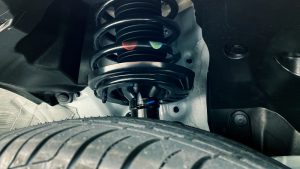
Coil springs compress as the wheels travel over uneven surfaces, helping absorb road impacts before they reach the cabin
Your car’s suspension relies on several parts, but coil springs and shock absorbers carry the bulk of the workload. They operate together, and once you understand what each one does, the wider system becomes easier to follow.
Coil Springs: Present on the vast majority of modern vehicles, coil springs compress each time a wheel encounters a bump and then extend again to bring the wheel back to its normal position. That compression absorbs the initial force from the road before the shock absorber takes charge of what comes next.
However, coil springs don’t last forever. Wear sets in over time, and they can gradually lose height, develop fine cracks, or, in some cases… snap altogether.
A sagging spring can leave one corner of the car sitting lower than the other. A cracked or fractured spring is one of several components that can produce a knocking sound when you drive over bumps, and it’s a recognised cause of MOT failure.
So what stops the car from bouncing after every bump? That’s where the shock absorber comes in.
Shock Absorbers: These parts are often known as dampers. They manage how the spring moves after compression. Inside, oil passes through a series of internal valves each time the suspension cycles, and that resistance slows the movement down, preventing the car from bouncing repeatedly. When shock absorbers lose their effectiveness, you may notice the car swaying after bumps, the nose dipping under braking, or excessive body movement through corners.
Some vehicles take things a step further by packaging both parts into one unit.
MacPherson Struts: This layout pairs the coil spring and shock absorber into a single combined unit called a strut. It’s widely used across a broad range of vehicles, including many front-wheel-drive models. The spring wraps around the shock absorber body, and the entire assembly also forms part of the steering and suspension geometry. Where struts are fitted, repair work is carried out on the assembly as a whole rather than on the spring and shock absorber as separate items.
Not every vehicle follows this layout, however.
Some models, particularly those in the premium or performance segment, use a double-wishbone or multi-link arrangement in which the spring and shock absorber are separated and mounted in different positions.
If you’ve noticed your car bouncing more than it used to, less composure through bends, or the front dropping noticeably when you brake, it’s worth having the springs and shock absorbers assessed.
The team at Standish Service Station, Wigan, can check these components and let you know what needs attention.
Control Arms, Bushings, and Anti-Roll Bars: What They Do
Springs and shock absorbers deal with the up-and-down movement, but your suspension also needs to hold each wheel in the correct position and keep its alignment true. That’s the role of control arms, bushings, and anti-roll bars.
- Control Arms: These metal links connect each wheel hub assembly to the car’s chassis or subframe. They let the wheel travel up and down as the suspension moves while keeping it anchored in its correct geometric position. When the bushings or ball joints within a control arm start to deteriorate, the geometry drifts, which directly affects how the car steers, brakes, and wears its tyres.
- Bushings: At each connection point between a control arm and the chassis or hub assembly, a rubber bushing sits between the metal surfaces. Its purpose is to absorb vibrations, dampen noise, and allow controlled flex between moving components. When bushings wear, they become one of the most common sources of a knocking sound when you drive over bumps, particularly at lower speeds. You may also notice the steering becoming less precise, or your car pulling to one side, although a pull can equally come from tyre pressures, wheel alignment, or a brake issue.
- Anti-Roll Bars and Drop Links: Spanning the full width of the car, anti-roll bars tie the left and right suspensions together. Their job is to limit how far the body leans when you corner. Short connecting pieces called drop links attach the bar to the suspension on each side.
Drop links wear on a routine cycle and are one of the most recognised items during an MOT inspection.
A worn drop link can produce a noticeable rattle or knocking sound over uneven surfaces. Where the ball joints develop excessive play or the protective dust cover has deteriorated enough to let dirt into the joint, the outcome can be an MOT advisory or a fail, depending on the severity.
If you’re hearing a knocking sound when you drive over bumps, noticing uneven tyre wear, or the car doesn’t feel as sharp as it once did, control arms, bushings, or drop links could be involved.
It’s worth getting these assessed sooner rather than later. Call Standish Service Station on 01257 422899, and we’ll talk you through what to do next.
Air Suspension and How It Can Fail
Some premium vehicles feature air suspension in place of conventional coil springs. Instead of a metal spring at each corner, these systems use pressurised airbags that inflate and deflate to support the car and control its ride height. Damping is still provided by shock absorbers, as in a conventional system.
In more advanced systems, the car can adjust its height on the move, with a compressor supplying air to each airbag and electronic controls managing the pressure at all four corners to keep the vehicle level. The system can respond to changes in speed, road conditions, or driver-selected preferences.
The clearest warning sign that air suspension is developing a fault is one corner of the car sitting lower than the rest, or the car dropping on one side after being parked overnight. This points to a leak in one of the airbags or to a malfunction in the valve block that directs air where it’s needed.
When an airbag leaks, the compressor has to work harder to compensate for the pressure loss, and that increased demand can accelerate wear on the compressor itself over time.
When it comes to repairs and maintenance, air suspension is specialist territory. The systems are electronically controlled; the components differ from one vehicle to the next, and tracing a leak requires both experience and the right tooling.
If your vehicle has air suspension and something about how it sits, or handles doesn’t feel right, it’s worth having it assessed by an expert.
What Does Worn Suspension Feel Like?
Suspension wear doesn’t announce itself all at once. It builds gradually over time, and because you’re driving the car every day, the small shifts in ride quality and handling slip by unnoticed as the driving experience alters.
So, what does worn suspension feel like when you’re driving?
Here are some common signs of worn suspension worth looking out for:
- Clunking or Knocking: A repeated noise each time you pass over bumps, speed bumps, or steer at lower speeds. Worn bushings, deteriorating drop links, a cracked or broken spring, or other suspension components can all be responsible.
- The Car Pulling to One Side: Without any steering input, the car drifts to the left or right. Worn bushings or control arm joints that have shifted the wheel geometry are one explanation, alongside tyre pressures, alignment, and brake-related factors.
- Uneven Tyre Wear: One edge of the tyre wearing down more than the rest, or differences in tread depth across the axle, can indicate that suspension wear has shifted the wheel position away from its ideal position.
- One Corner Sitting Lower: A visible lean to one side can point to a sagging or broken spring. On vehicles with air suspension, a leak in the system can produce the same effect.
- Excessive Lean Through Corners: The body rolls further than it used to when you turn, or the car feels less stable at speed than you remember.
- The Nose Dipping Under Braking: When the nose of the car dips more than expected as you brake, it can be a sign that the suspension isn’t managing weight transfer as effectively as it should. Worn shock absorbers are one possible contributor.
These are some of the most common car suspension problems and symptoms, and they can overlap.
More than one part can contribute to the same sensation you experience behind the wheel, and that’s why having the full system assessed by an expert is a better approach than guessing at individual components.
If any of this sounds familiar, get in touch with Standish Service Station, Wigan, and we can take a look for you.
Suspension and Your Vehicle’s MOT
A suspension check is part of every MOT. Where deterioration has progressed far enough to affect safety or roadworthiness, the result is either an advisory or a failure.
Your car’s ball joints, springs, gaiters, bushings, drop links, and shock absorbers are the suspension components picked up most during MOTs. Each is assessed for excessive play, physical damage, and deterioration, and anything beyond an acceptable threshold is recorded.
An MOT is a legal requirement for all UK vehicles over three years old. It’s a one-day snapshot of your car’s condition, the legal minimum rather than a full vehicle health assessment.
So, if you’ve been wondering “How long does car suspension last” before it becomes a concern, it’s worth noting that there’s no specific answer; it varies depending on a number of factors. Regular checks, particularly around MOT time, are the most practical way to catch wear while it’s still developing.
If suspension advisories have appeared on previous MOTs, it’s worth having them assessed before your next test rather than waiting for them to be flagged again.
Why a Specialist Assessment Matters
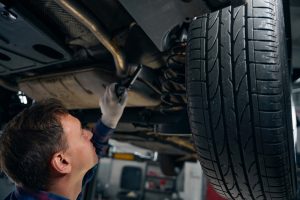
A thorough suspension assessment helps pinpoint worn components and identify the cause of knocking, pulling or changes in handling
Failing suspension components can produce symptoms that overlap. A knocking sound each time you drive on an uneven surface could come from a worn bushing, a drop link, or a fractured spring. Your car pulling to one side might be caused by a control arm, a degraded bushing, or something unrelated to the suspension.
That’s why identifying the actual cause before any parts are ordered makes all the difference. Replacing the wrong component leaves the original fault in place, along with the cost.
A garage with the right expertise will inspect the entire system rather than focusing on a single part. That means examining how each component relates to the others, tracing the wear to its source, and explaining what’s been found before recommending any work.
Now that you have the answer to “How does car suspension work?” and understand what sits beneath your vehicle and how it wears, you’re in an informed position when you speak to a technician. You’ll know what questions to ask, and you’ll follow the explanation when you hear it.
Why Choose Standish Service Station, Wigan, for Your Suspension?
Understanding how your suspension works and what can go wrong puts you in a stronger position the next time something doesn’t feel right. The next step is choosing somewhere that can inspect the entire system and carry out any necessary work to a high standard.
Suspension wear tends to build over time, and catching it early means many issues can be dealt with before they progress further, start affecting neighbouring components, or lead to an MOT failure.
At Standish Service Station, Wigan, our technicians have the experience and equipment to assess your full suspension system, identify areas of wear, and carry out all repairs to a high standard.
By choosing Standish Service Station, you benefit from:
- Expert technicians working on your vehicle.
- A 12-month parts-and-labour guarantee on all repairs carried out.
- A free courtesy car while your vehicle is with us.
- A clear explanation of what’s been found before any work begins.
Join {{review-count}} other drivers across Wigan and Bolton who’ve given us a {{average-rating}} rating for accurate repairs, honest service and excellent value.
Whether you’ve noticed a noise, had an MOT failure or advisory, or want your vehicle’s suspension system checked, call Standish Service Station, Wigan, on 01257 422899, and book an expert suspension inspection.
Our team will assess your car’s suspension system and let you know where things stand.
Frequently Asked Questions
How does car suspension work?
Your car’s suspension fills the space between the wheels and the body, managing how the vehicle deals with imperfections in the road surface. Coil springs compress to soften the force of each bump, and shock absorbers regulate how the springs move afterwards to keep the car from bouncing. Control arms and bushings hold each wheel in the correct geometric position as the suspension cycles. When all these parts work together as they should, the car feels stable, composed, and comfortable to drive.
What does car suspension do?
Your car suspension occupies the gap between the wheels and the body of the vehicle, governing how the car responds to changes in the road surface. It keeps the tyres pressed firmly to the tarmac, manages how far the body moves through bends and when you brake, and contributes to a ride that feels settled and controlled. As components within the system wear, you may start to notice changes in steering feel, ride comfort, or overall handling.
What are the signs of worn suspension?
Signs of worn suspension include a knocking or clunking sound when you drive over bumps and potholes, your car drifting to one side without steering input, tyre tread wearing unevenly, one corner of the vehicle sitting lower than the others, and the body leaning more than usual through bends. These changes tend to creep in gradually, so it’s worth having things assessed if your car feels different to how it used to. Our team of experts at Standish Service Station can check it for you.
How long does car suspension last?
The lifespan of car suspension varies. It depends on driving habits, road conditions, mileage, and the specific component in question. Some parts wear sooner than others, and the same component can last very different lengths of time on different vehicles. Regular checks, particularly around MOT time, are the best way to catch wear before it progresses or begins affecting how the car drives.
Can worn suspension cause an MOT failure?
Yes, worn suspension can cause an MOT failure. Ball joints with excessive play, cracked or broken springs, split gaiters, deteriorated bushings, and worn drop links are all items that an MOT inspection can identify, and each can result in a failure where the wear has progressed far enough. If a suspension advisory appeared on your last MOT, getting it assessed before the next test is a sensible step.